
Key Takeaways
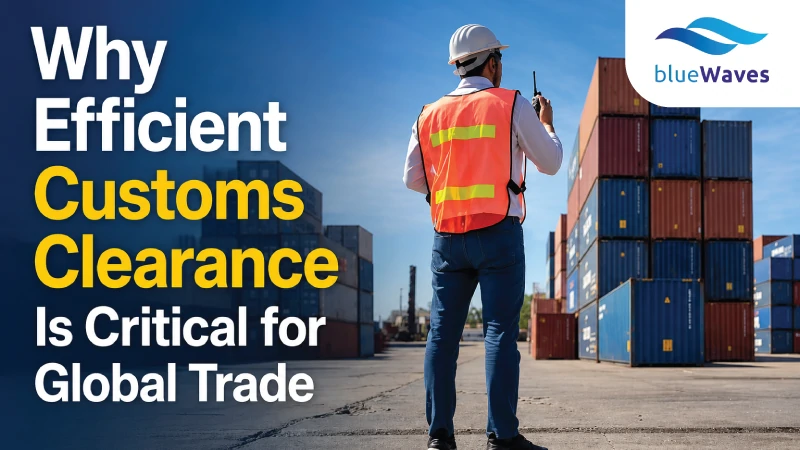
- 1. Customs Clearance Is Critical to Smooth Global Trade Efficient customs clearance ensures goods move across borders without delays, penalties, or compliance issues. A professional customs clearance partner helps businesses manage documentation, duties, regulations, and customs procedures accurately.
- 2. Documentation and Compliance Must Be Error-Free Incorrect invoices, HS codes, permits, or declarations can lead to shipment holds, demurrage charges, and financial losses. Experienced customs agents minimize risks by ensuring all paperwork and regulatory requirements are completed correctly the first time.
- 3. Expert Customs Agents Help Reduce Costs Skilled customs professionals not only manage clearances but also identify opportunities for duty optimization through Free Trade Agreements, duty drawback schemes, Advance Authorization, and EPCG benefits, helping businesses save significantly on import-export costs.
- 4. Industry Knowledge and Regulatory Expertise Matter Different products require different approvals and certifications such as BIS, FSSAI, WPC, DGFT, or phytosanitary clearances. The best customs clearance agents understand commodity-specific regulations and proactively manage compliance before shipments arrive.
- 5. Choose a Partner with Transparency, Technology, and Strong Support Reliable customs agents provide transparent pricing, fast communication, digital filing capabilities, and real-time coordination during customs inspections or shipment queries. Responsive customer service and nationwide clearance capabilities are essential for efficient logistics operations.
Global trade has become the backbone of modern business, connecting manufacturers, suppliers, and customers across continents. Every day, millions of goods move across international borders, creating opportunities for businesses to expand into new markets and strengthen supply chains. However, one of the most important factors that determines the success of international shipping is customs clearance. Without a well-managed customs clearance process, shipments can face delays, increased costs, compliance issues, and disruptions that directly affect business operations.
Efficient customs clearance plays a central role in maintaining the smooth movement of goods while meeting international regulations. Businesses involved in import and export activities need experienced customs professionals who understand documentation requirements, tariff classifications, duties, and changing trade laws. This is where Bluewaves Logistics brings value through professional customs clearance services designed to simplify global trade complexities.
Companies searching for the Best Custom Clearance Agents in Ahmedabad often prioritize reliability, accuracy, and industry expertise. A professional customs clearance partner can help businesses reduce delays, minimize financial risks, and maintain compliance throughout the shipping journey. Bluewaves Logistics has built a strong reputation by offering dependable customs clearance support tailored to various industries and shipment requirements.
What Customs Clearance Actually Involves — And Why It Is So Complex
Let’s be straightforward about this: customs clearance is one of the most regulation-heavy processes in global commerce. Every shipment that crosses an international border must be formally declared, examined, and approved by the customs authority of the country it is entering or leaving. No exceptions. On the surface, it sounds manageable. In practice? It involves a web of documentation requirements, tariff codes, duty assessments, commodity-specific regulations, and country-specific compliance rules that change more often than most businesses can track.
For a typical import shipment, the process involves submitting a bill of entry to Indian customs, supported by documents like the commercial invoice, packing list, bill of lading or airway bill, certificate of origin, and any product-specific permits. Customs officers review the declaration, assess applicable duties, and decide whether to release the cargo, query certain details, or physically examine the shipment. For exports, a shipping bill must be filed, supported by similar documentation. The process must align with the Directorate General of Foreign Trade (DGFT) regulations and any export licensing requirements.
The Best Custom Clearance Agents in India handle this entire process on your behalf — not just filling forms but strategically managing each step to keep cargo moving without unnecessary interruptions.
The Real Cost of Getting Customs Clearance Wrong
Here is something most businesses only learn the hard way: customs mistakes are expensive far beyond the obvious penalty amounts. Think about it this way. A pharmaceutical importer in Ahmedabad is waiting for a critical raw material shipment. The agent files the bill of entry with an incorrect HS code. Customs flag it. The shipment goes into the examination queue. Each day at the port costs them in demurrage. Their production line is idle. They miss a supply commitment to a domestic buyer. That buyer sources from a competitor next time.
Or consider an exporter whose shipping documents are incomplete at the time of customs filing. The let export order is delayed. The vessel sails without the cargo. The buyer in Europe cancels the order. The exporter absorbs the ocean freight cost and loses a client they spent a year developing. These are not edge cases. They happen regularly — and they happen far more often to businesses that treat customs clearance as a low-priority administrative function rather than a critical trade operation. That mindset shift is exactly what separates businesses that scale their international trade confidently from those that treat every shipment as a gamble.
Key Areas Where Professional Customs Agents Add Real Value
Getting Documentation Right the First Time
There is no error in customs documentation. A transposition in a declared value, a commodity description that does not match the actual goods, or a missing pre-import permit — any of these can trigger a hold that takes days or weeks to resolve.
Professional customs agents build documentation checklists tailored to your specific commodity and trade lane. They cross-verify invoices against packing lists, confirm that origin certificates comply with the requirements of the destination country, and flag gaps before a shipment even leaves the supplier’s facility. Prevention is always faster and cheaper than correction.
Tariff Classification — More Than Just a Code
Every product that crosses an international border is assigned a Harmonized System (HS) code. That eight-digit number determines your duty rate, your eligibility for exemptions under Free Trade Agreements, and whether your product needs additional regulatory clearance. Get it wrong, and you either overpay duties for years without realizing it or face a compliance notice down the line. Experienced classifiers at the Best Custom Clearance Agents in Ahmedabad stay current on classification rulings issued by the CBIC and international classification guidance. For businesses that import or export a wide range of products, this expertise translates directly into cost savings and compliance confidence.
Duty Management and Legitimate Optimization
Not every rupee of import duty is unavoidable. India has Free Trade Agreements with multiple countries that offer preferential tariff rates for qualifying goods. The Advance Authorization scheme allows duty-free import of inputs used in export production. The EPCG (Export Promotion Capital Goods) scheme offers concessional duties on capital equipment imports. Duty drawbacks allow exporters to recover duties paid on imported inputs.
These benefits exist specifically to support businesses engaged in international trade. But claiming them requires precise documentation, timely applications, and ongoing compliance with scheme conditions. The Best Custom Clearance Agents in India actively identify which benefits apply to your business and manage the claims process — turning what many importers see as unavoidable costs into recoverable savings.
Regulatory Compliance Across Commodity Categories
Here is where customs clearance gets genuinely complex. Different products face very different regulatory landscapes when crossing Indian borders.
Wireless communication devices need a WPC license before they can be imported. Food products require FSSAI registration and, in many cases, import permits from the Food Safety and Standards Authority. Electronics and electrical goods covered under the BIS compulsory registration scheme must be certified before import. Agricultural goods often require phytosanitary inspection and a plant quarantine certificate. Pharmaceutical imports need approval from the Drugs Controller. Hazardous chemicals require safety data sheets and may face import restrictions.
Missing any of these clearances before a shipment arrives creates immediate problems — the cargo cannot be released until the compliance gap is resolved, and by then, port charges have been running for days. The Best Custom Clearance Agents in Ahmedabad work proactively with clients to identify regulatory requirements for each commodity well before shipment dispatch, coordinating with relevant authorities to have approvals in place when cargo arrives.
Remote Customs Clearance — A Capability That Matters
Not every business is located next to the port their cargo arrives at. A manufacturer in Ahmedabad might import machinery arriving at Nhava Sheva in Mumbai, or export goods through Mundra port. Remote clearance capabilities — the ability to manage customs filings, duty payments, and coordination with port authorities at a distance — are essential for businesses whose shipments move through multiple gateways.
The Best Custom Clearance Agents in India offer remote clearance services for shipments arriving at any port or airport in the country, giving clients a consistent, accountable point of contact regardless of where their cargo enters or exits India.
DGFT Consultancy: The Strategic Layer Above Customs Clearance
Customs clearance handles immediate transactions. DGFT consultancy handles the strategic framework around it. The Directorate General of Foreign Trade governs India’s foreign trade policy — and for businesses with significant import-export volumes, DGFT schemes represent meaningful financial opportunities. IEC (Import Export Code) registration is the basic requirement for any cross-border trade. Beyond that, businesses can benefit from Advance Authorizations, EPCG licenses, duty drawback claims, SEIS benefits for service exporters, and more.
Navigating DGFT’s processes requires not just familiarity with the schemes, but the discipline to meet filing deadlines, maintain compliance records, and respond to queries. Agents who combine customs clearance expertise with DGFT consultancy offer clients a genuinely integrated trade compliance service — one that reduces the number of parties involved and keeps accountability clear.
Choosing the Right Customs Clearance Partner: What to Look For
When you are evaluating customs agents, the conversation should go well beyond “how much do you charge?” Ask about their experience with your specific commodity category. Ask whether they handle both air and sea clearance. Ask how they stay updated on regulatory changes — because in India’s customs environment, the rules shift frequently. Ask about their ICEGATE capabilities and electronic filing processes. Ask what happens when a shipment is examined or a query is raised: who handles it, how fast, and how do they communicate with you?
Pricing transparency matters too. A professional agent provides a complete, itemized quotation — base customs charges, handling fees, documentation charges, and any third-party regulatory fees — without burying costs in the fine print. And pay attention to responsiveness from the first conversation. An agent who takes three days to respond to an enquiry will take three days to respond when your container is stuck at port.
Why Choose us
The best thing Bluewaves Logistics does is just shows up for its clients when they need it, which has put them in the Best Custom Clearance Agents in Ahmedabad category. The team deals with import/export customs clearance in both sea and air modes and has remote clearance capability for all ports and airports of India. Whether it’s navigating the tariff classification, optimizing duties, securing FSSAI food clearances, BIS certification, WPC license assistance, or DGFT consultancy, Bluewaves Logistics provides the multi-layered expertise that businesses trading amidst intricate regulatory landscapes truly require. It is proactive, rather than reactive; seeking compliance rather than fixing problems after cargo is stuck. Clients receive a team dedicated to them with a steady line of communication, quick response times and attention to every shipment no matter the size. If you’re an importer or exporter in Gujarat or beyond, Bluewaves Logistics is your partner for the hassle-free clearance.
Conclusion
When done properly, you don’t notice customs clearance, but when it’s not, it’s at the intersection of regulation, documentation, duty management, and commodity compliance. If it fails, its repercussions spread throughout your entire supply chain. When a business aligns with the Best Custom Clearance Agents in India, they’re not merely purchasing a service; they’re investing in a shield for each shipment they send or receive. Whether you’re seeking documentation accuracy, HS code classification, HS management, or the ability to clear customs remotely, the right customs partner is one of the best investments you can make in your trading business. It will show up in your supply chain if you select carefully.
For expert guidance on efficient customs clearance and global trade support, connect with Bluewaves Logistics today. Call us at +91 8690887751 or email sales@bluewaveslogistics.com
Frequently Asked Questions
What documents does my business need to prepare for an import shipment in India?
Standard import clearance in India requires a bill of entry, commercial invoice, packing list, bill of lading or airway bill, and certificate of origin. Depending on your product, you may also need FSSAI permits, BIS registration certificates, WPC licenses, phytosanitary certificates, or drug control approvals. The Best Custom Clearance Agents in Ahmedabad will map out exactly which documents apply to your commodity well before your shipment arrives, so nothing is missing at the time of filing.
What is an HS code and how does it affect my import duty?
The Harmonized System (HS) code is an internationally standardized numerical classification assigned to every traded product. It determines the basic customs duty rate, IGST rate, and whether your goods qualify for any exemptions under India’s Free Trade Agreements or duty exemption schemes. An incorrect HS code can lead to overpayment of duties, compliance violations, or both. The Best Custom Clearance Agents in India employ experienced classifiers who assign the correct code and can support you if the classification is ever queried by customs.
How can my business legally reduce import duty costs?
Several legitimate mechanisms exist for reducing import duties in India. If your goods originate from a country with which India has a Free Trade Agreement, preferential tariff rates may apply. The Advance Authorization scheme allows duty-free import of inputs used in export production. The EPCG scheme provides concessional duty on capital goods imports. Duty drawback allows exporters to recover duties on imported inputs. The Best Custom Clearance Agents in Ahmedabad assess your business’s eligibility for these benefits and handle the associated filing and compliance requirements.
What happens if my shipment is selected for customs examination?
When customs authorities select a shipment for examination — whether a document check or a physical inspection — the clearance timeline extends. Physical examination involves customs officers inspecting the actual cargo against the declared description, quantity, and value. Professional agents manage this process by preparing a complete examination report, coordinating with the examining officer, and expediting release once the examination is complete. The Best Custom Clearance Agents in India also work proactively to reduce examination risk by submitting accurate, well-documented declarations from the outset.
Can you handle customs clearance for shipments arriving at ports outside Ahmedabad?
Absolutely. Remote customs clearance — managing filings, duty payments, and port coordination for shipments arriving at any Indian port or airport — is a core capability for professional customs agents. Whether your cargo arrives at Nhava Sheva, Mundra, Chennai, Mumbai, Bangalore, or Delhi, Bluewaves Logistics can handle the clearance process end-to-end without you needing a separate agent at each location.