
International Import Sea Freight Services in India
Our company offers a wide range of services for domestic shipments simultaneously and for international freight forwarding, regardless of the size or weight of the shipment. As a matter of fact, as a professional sea freight forwarder, we offer cost-effective services to meet all import requirements. In the meantime, the cost estimates for freight, port charges, consular fees, fees for special documentation, insurance, and freight forwarder fees are some of the added information provided to the clients for smooth logistics. We offer safe and secure cargo handling for the global transfer of cargo. Although true, we are an affordable and dependable sea freight forwarder. At the same time, we take pride in tailoring our services to meet your needs across all market sectors if you want to select a sea freight forwarding agent. Here’s a brief overview of key aspects related to sea freight:

- Cost-Effectiveness:Sea freight is often considered a cost-effective option for transporting large volumes of goods over long distances. It is particularly suitable for bulky or heavy items.
- Containerization:Goods are typically shipped in standardized containers, which simplifies the loading and unloading process and enhances the security of the cargo during transit.
- Global Trade Backbone:Sea freight plays a crucial role in the global supply chain, connecting major ports worldwide and facilitating trade between nations.
- Transit Times:While sea freight is generally slower compared to air freight, advancements in container tracking systems and logistics planning have improved the predictability of transit times.
- Types of Cargo:Sea freight is versatile and can accommodate various types of cargo, including raw materials, finished products, automobiles, machinery, and more.
- Port Infrastructure:Ports serve as crucial nodes in sea freight logistics. They are equipped with facilities for loading and unloading containers, customs clearance, and other essential services.
- Environmental Impact:Sea freight tends to have a lower environmental impact compared to air freight, making it a more environmentally friendly option for certain types of cargo and longer distances.
- Regulations and Documentation:Like air freight, sea freight involves compliance with international regulations and documentation requirements. Customs procedures and proper documentation are critical for the smooth flow of goods across borders.
- Shipping Lines and Carriers:Various shipping lines and carriers operate globally, offering different routes, schedules, and services. Businesses often choose carriers based on their specific shipping needs.
- Intermodal Transport:Sea freight is often part of an intermodal transportation system, where goods may be transported by sea, land, and sometimes air, seamlessly integrated to optimize efficiency.
For more details please call us at +91-869-088-7751 or email sales@bluewaveslogistics.com
How We Work

Step 1 – Submit Your Query
Fill the form & submit your requirements so our expert can help

Step 2 – Analysis
Our expert will analysis your requirement & get back with a perfect solution

Step 3 – Stay up to date
After shipment you can get up to date with our live tracking link
Request A Quote
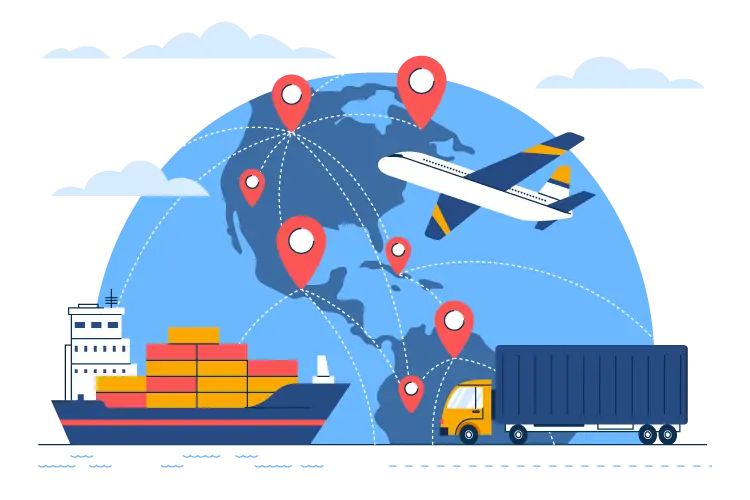
How Import Sea Freight Works
Sea freight is the most economical way to import large or heavy cargo into India. Blue Waves Logistics handles FCL and LCL ocean imports through Mundra and Nhava Sheva (JNPT), including customs clearance and final delivery.
FCL vs LCL Imports
FCL (Full Container Load) dedicates a full container to your shipment — best for large volumes, with faster handling and lower damage risk. LCL (Less than Container Load) shares container space with other importers and is cheaper for smaller consignments. We advise the right option per shipment.
Indicative Sea Import Transit Times to India
| Origin | Destination (India) | Indicative Transit |
|---|---|---|
| China / Far East | Mundra / Nhava Sheva | 12–20 days |
| UAE / Gulf | Mundra / Nhava Sheva | 5–10 days |
| Europe | Nhava Sheva / Mundra | 18–28 days |
| USA | Nhava Sheva | 24–35 days |
Transit times are indicative and vary by carrier, routing and customs processing.
Avoiding Demurrage & Detention
Demurrage applies when a container stays at the port beyond free days; detention applies when you hold the carrier’s container too long. Our team pre-files the Bill of Entry and clears cargo quickly to minimise these charges.
Documents for Sea Import Clearance
- Bill of Lading
- Commercial invoice & packing list
- IEC and applicable product licences (BIS, FSSAI, etc.)
- Bill of Entry (filed on ICEGATE by our CHA team)
Frequently Asked Questions
What is the difference between FCL and LCL imports?
FCL (Full Container Load) uses an entire container for one consignee and suits large volumes. LCL (Less than Container Load) shares a container among multiple shippers and is more economical for smaller cargo.
How long does sea import clearance take at Mundra/Nhava Sheva?
Once the vessel arrives and the IGM is filed, clearance with complete documents typically takes 2–4 working days, depending on examination and duty payment.
What are demurrage and detention charges?
Demurrage is charged when a container stays at the port beyond free days; detention applies when you hold the carrier’s container outside the port too long. Fast clearance minimises both.